Fitcheck
Personal Venture, Founder, 2024-Active
Fitcheck started with a feeling I couldn’t ignore. People admired distinctive personal style, asked where I found my clothes, and said they wanted to shop with more intention but didn’t know where to begin. That gap kept coming up in conversations, and it eventually became research.
In a survey I ran with potential early users, 90% said they wanted to improve their style. Most were shopping online already, but 70% didn’t know where to shop and fit uncertainty was the top frustration (personal survey, Nov 9, 2024). They weren’t lacking interest. They were lacking structure.
This tension isn’t just anecdotal. Gen Z has consistently ranked aesthetic self-expression as a top identity driver (Pinterest Predicts 2022), yet the systems that deliver fashion today work against that. Global retail is projected to reach $33 trillion by 2026, but brands overproduce $500 billion in clothing every year (Interplay Ventures, 2023). Much of it is never sold. Small and mid-sized retailers fail to move roughly 30% of their inventory.
In response, secondhand fashion is rising fast. The global market is expected to hit $350 billion by 2028, growing three times faster than traditional retail (ThredUp, 2024). Two in five items in a Gen Z closet are now secondhand. The reasons go beyond price. Most say they shop resale to reduce waste, but over half do it to find pieces that feel truly one-of-a-kind (Depop x Bain, 2021).
Fitcheck lives in the middle of that shift. It helps users find clothes they’re more likely to love and keep, and makes it easy to resell what no longer fits their life. It brings discovery and sustainability closer together, not through guilt or sacrifice, but through smarter systems and better design.
Research & Insights
1. Discovery without intent is already solved by social media
TikTok, Instagram, and Pinterest have made passive discovery habitual. But what they gain in inspiration, they lack in continuity. My survey found that despite 80% of people shopping online, most don’t know where to begin, suggesting a gap between inspiration and action. Platforms like Instagram create interest, but lack tools to turn that interest into confident, high-signal decisions.
3. Fit uncertainty drives waste and bad behavior
The personal survey I ran found that fit was the #1 concern in online shopping. Industry-wide, this leads to “bracket buying” (multiple sizes), which is bad for the environment, not a good user experience and money lost for the business.
2. Familiar UX patterns reduce cognitive load
Following Hick’s Law and familiar proven interfaces through other social media (TikTok, Pinterest) will make the interface familiar and welcoming.
Design Rationale
Design Language: Editorial Sheek Meets Minimalism
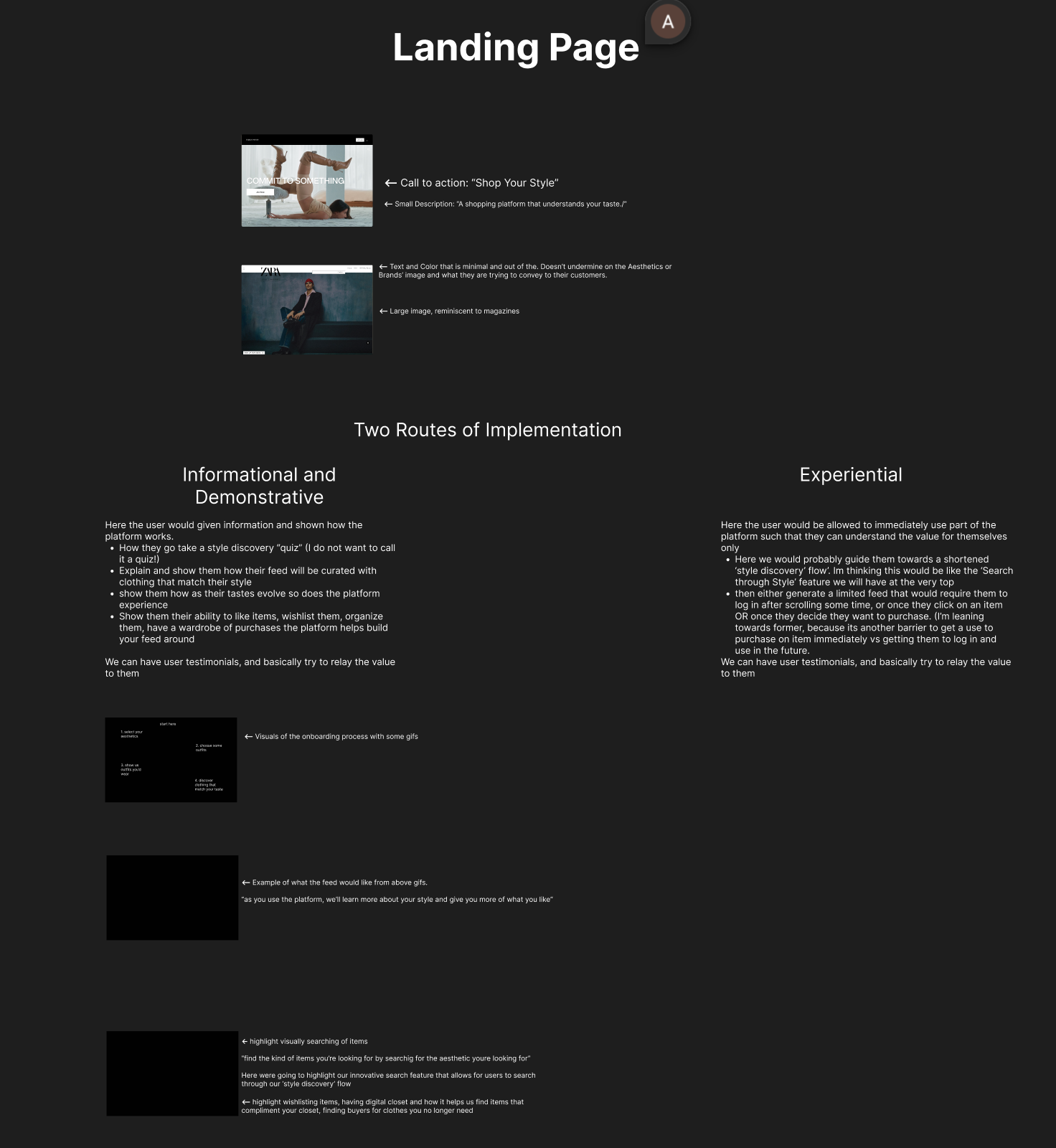
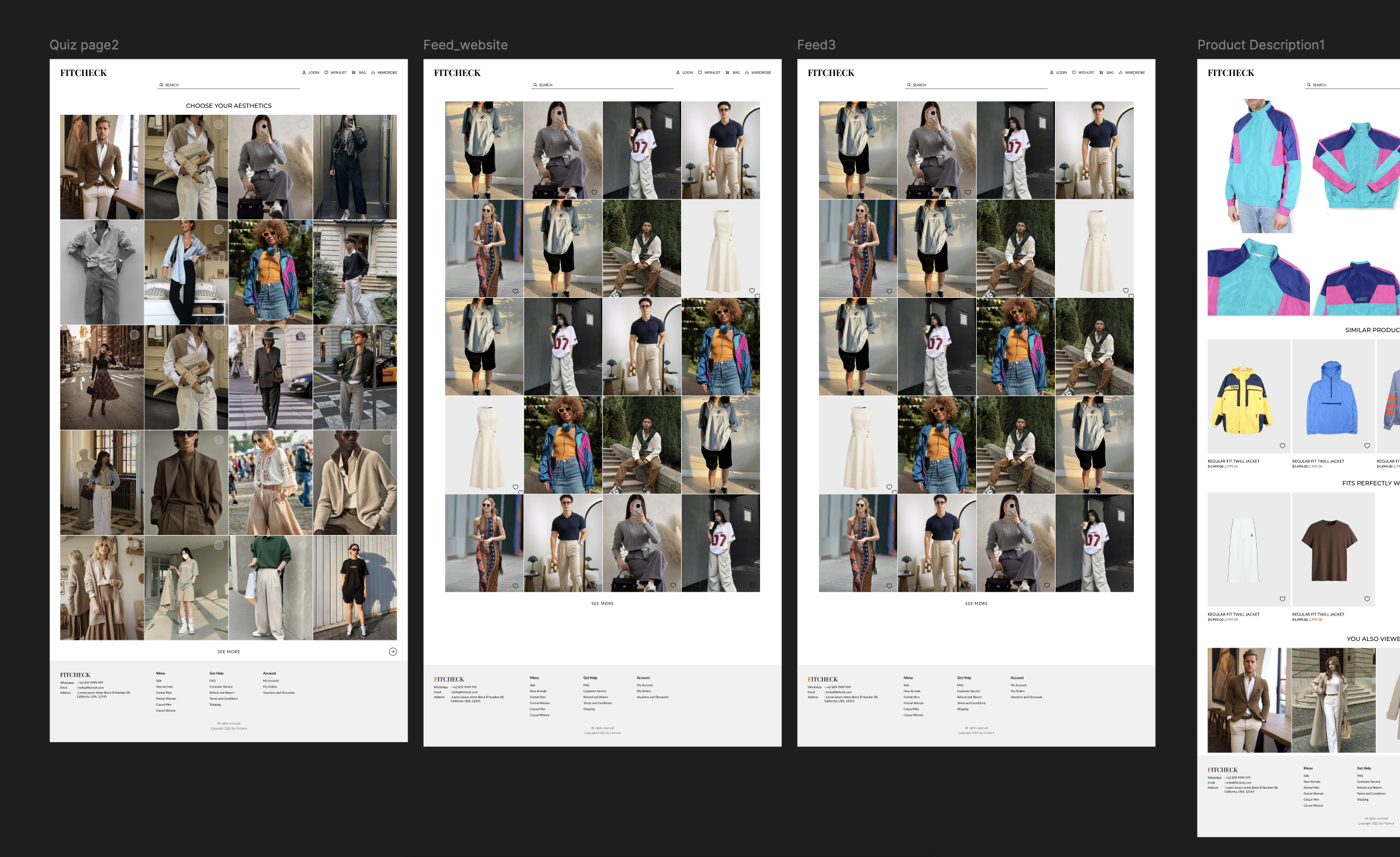
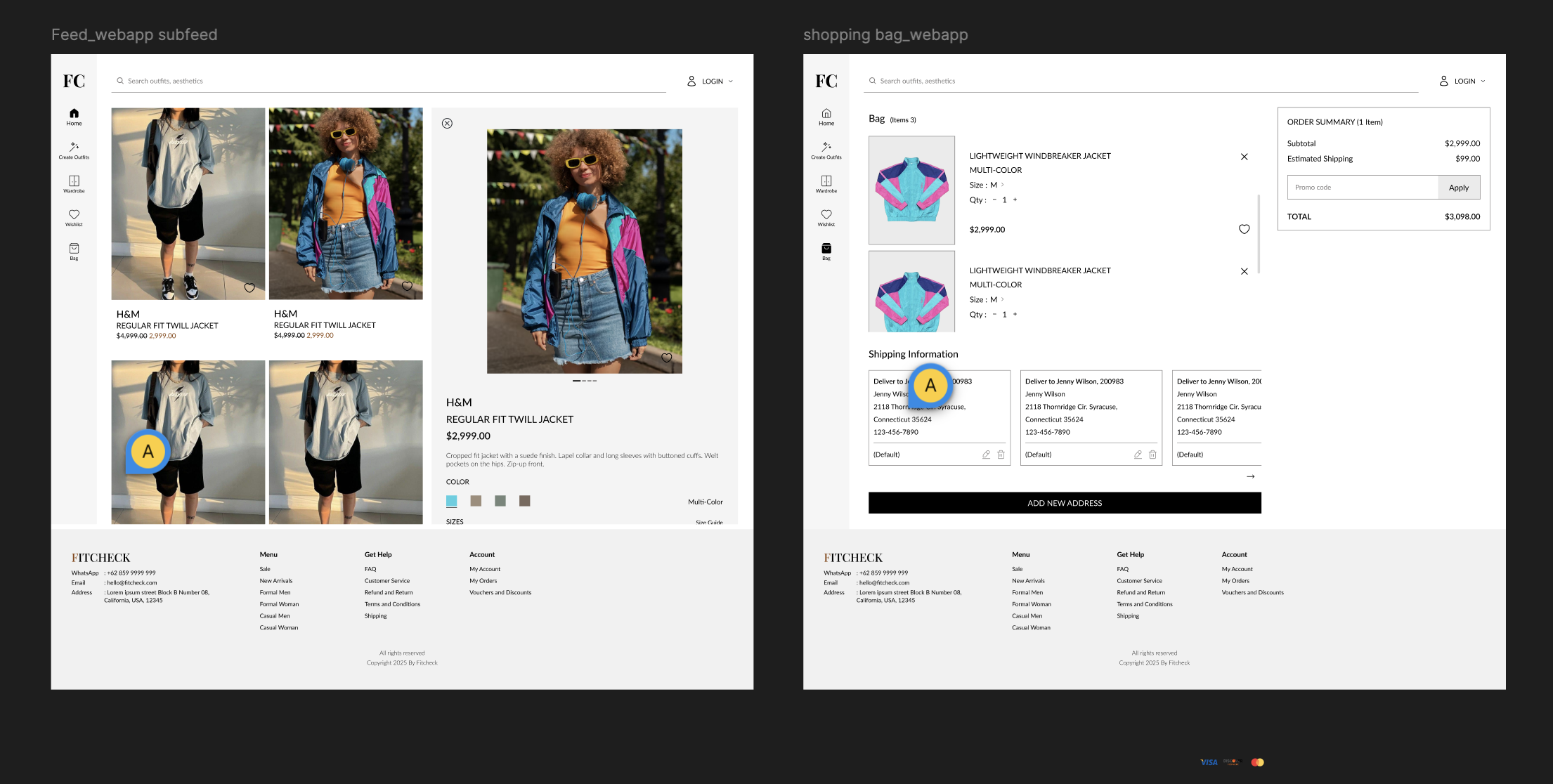
Fitcheck blends fashion-forward visuals with product clarity. It borrows from editorial design with confident type and open space, creating a sense of taste without noise. The intent is have it feel more like a personalized style platform than a cluttered e-commerce grid.
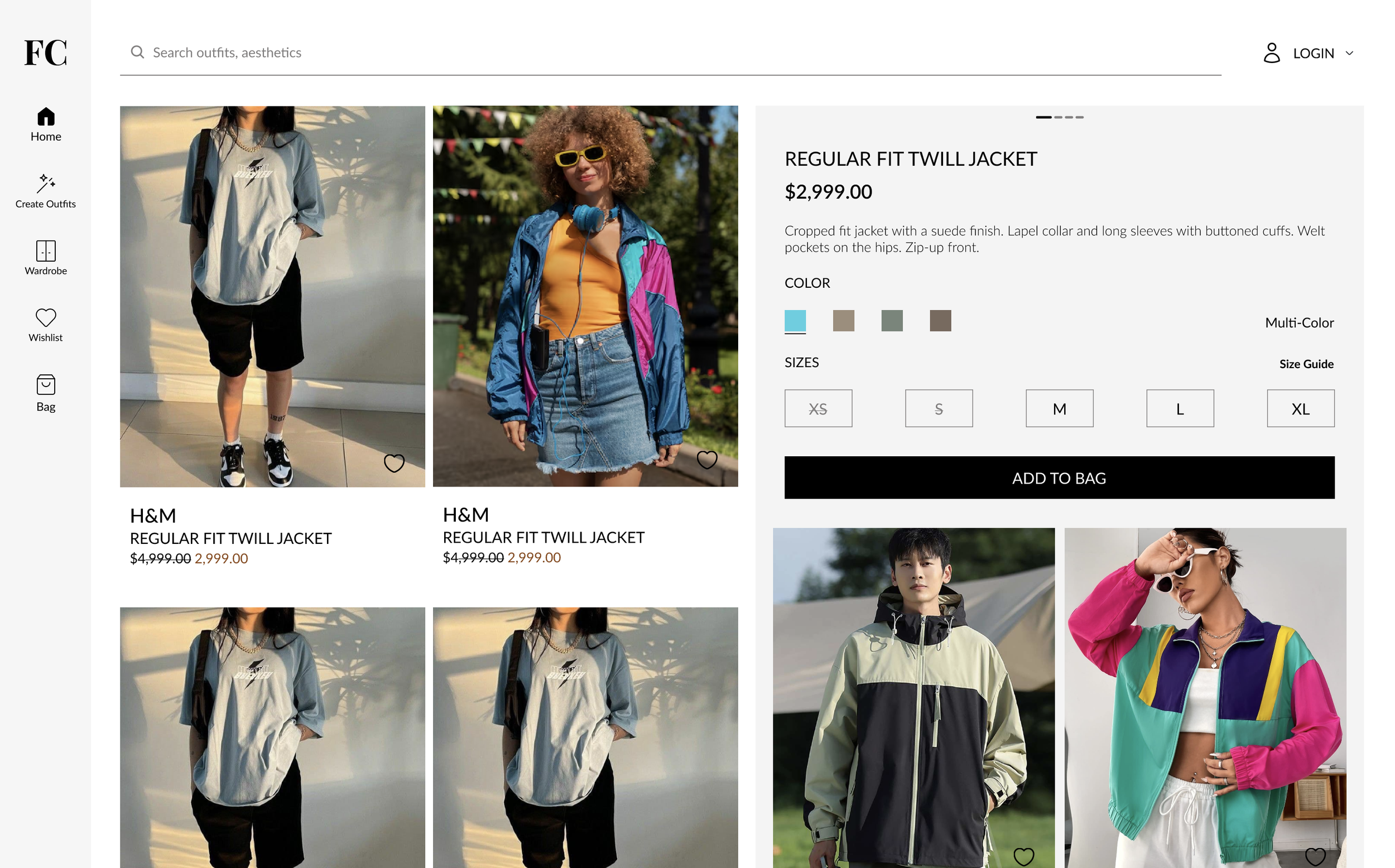
Wishlist
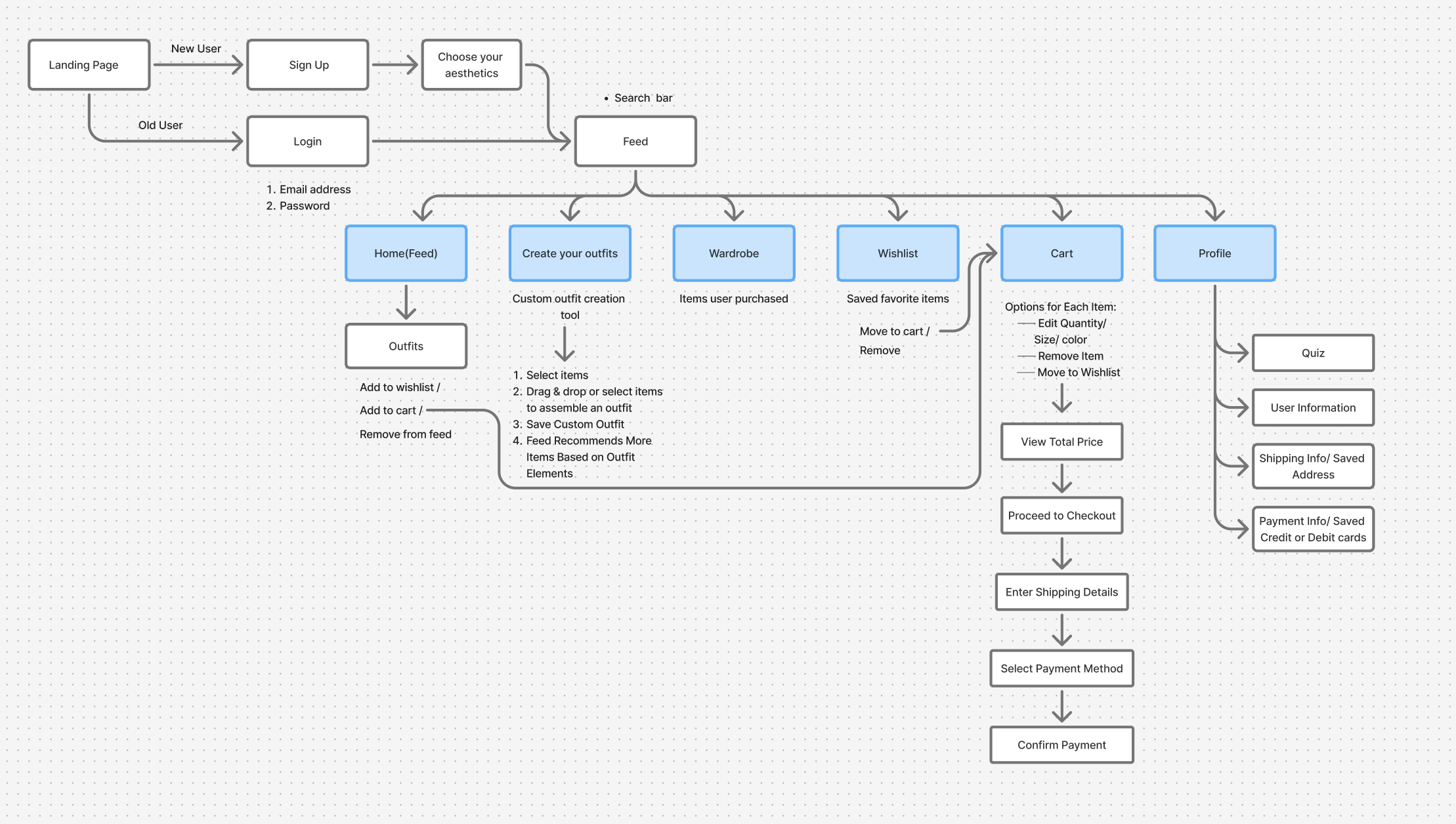
A wishlist is included because many people pause before buying and want a place to save pieces they are considering. This came up repeatedly in interviews as a natural part of how they shop. The wishlist becomes both a holding space for future purchases and a useful signal of taste that can sharpen recommendations over time.
Personalized Feed
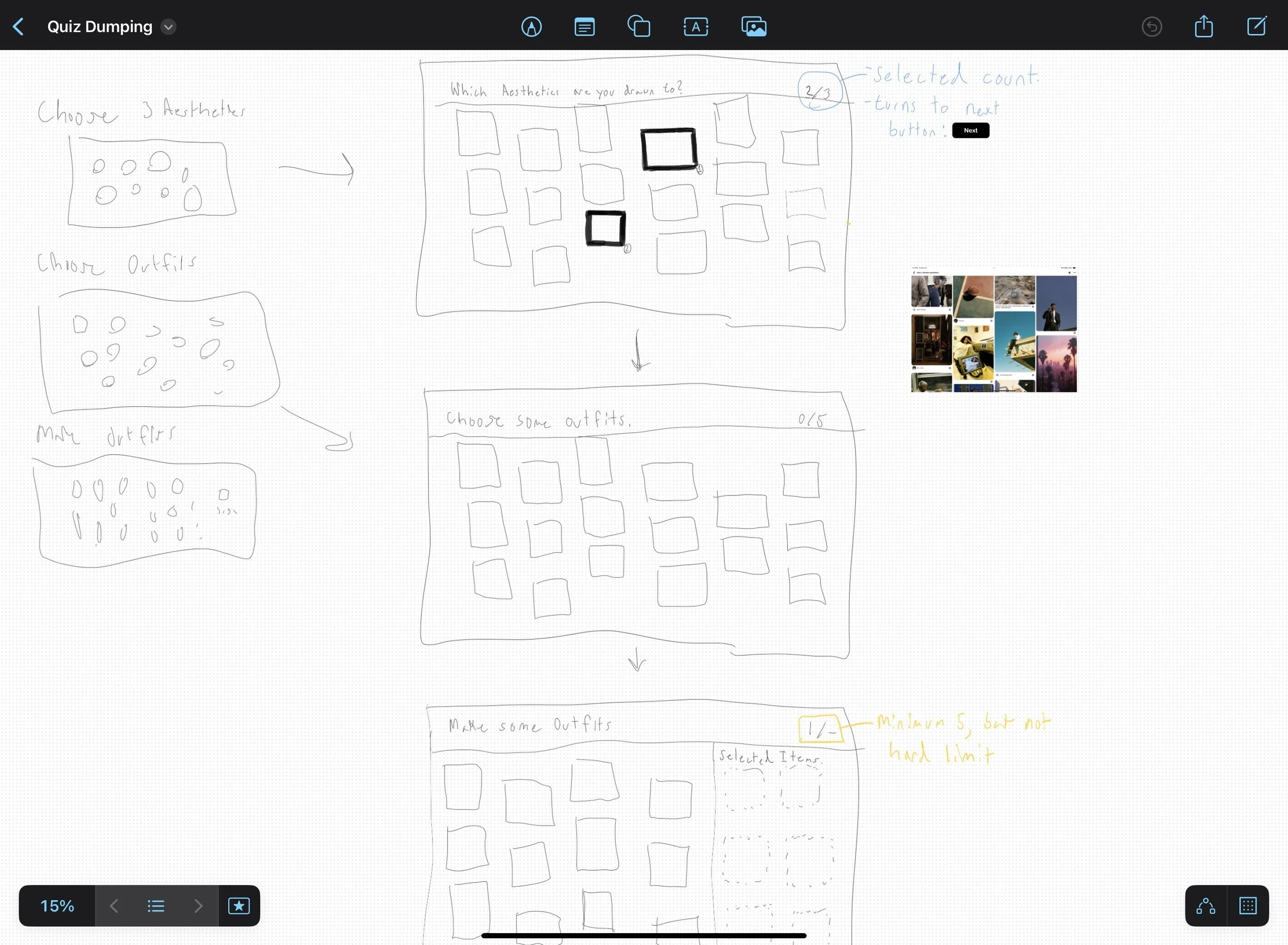
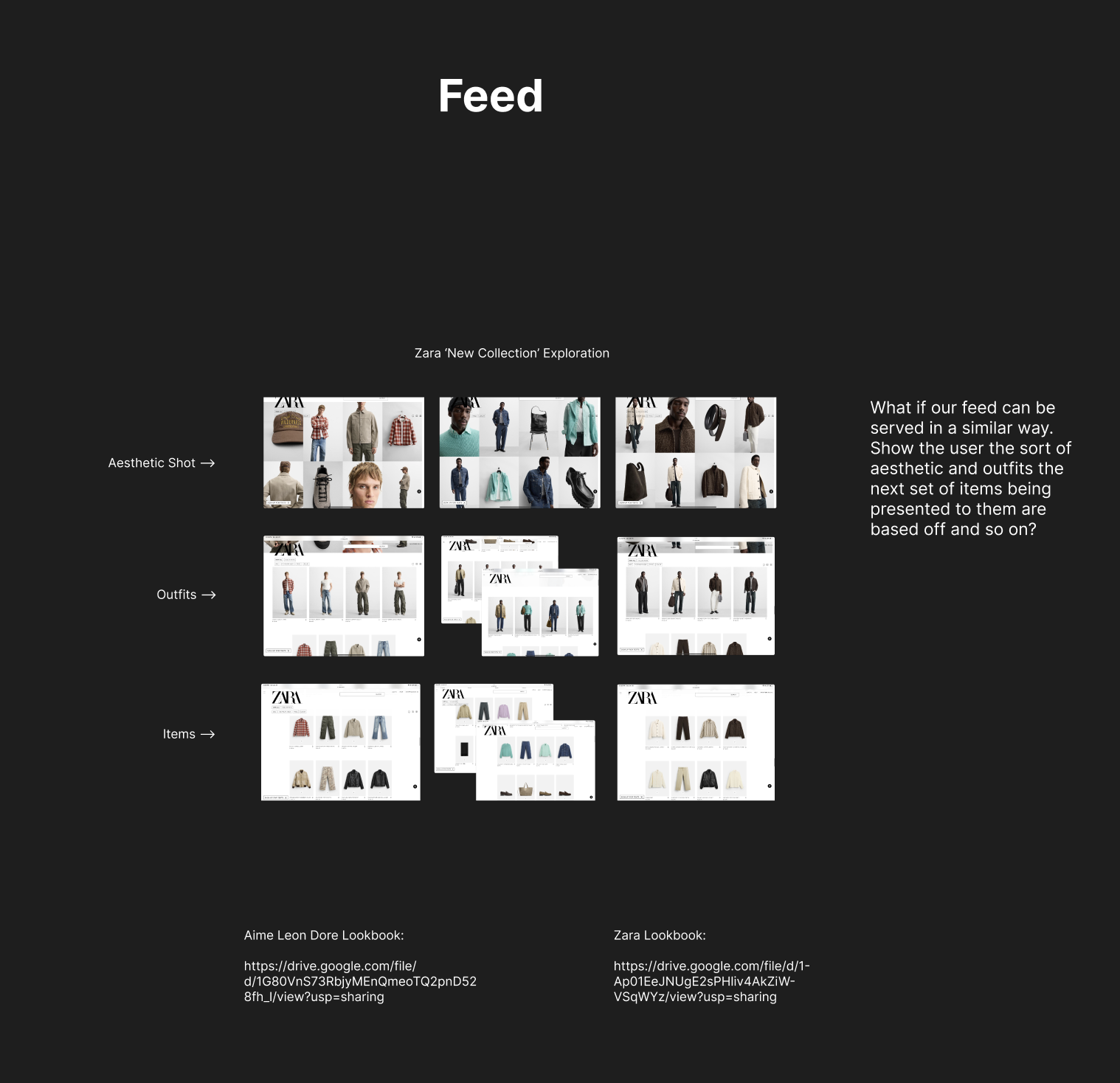
The feed is designed to feel familiar and effortless, borrowing the ease of TikTok and Pinterest while guiding users toward clearer style decisions rather than endless scroll. Since many people shop online but still feel overwhelmed, the feed will surface only a few items at a time to keep focus. Inline actions like save, dismiss, or purchase will allow users to move quickly without breaking flow.
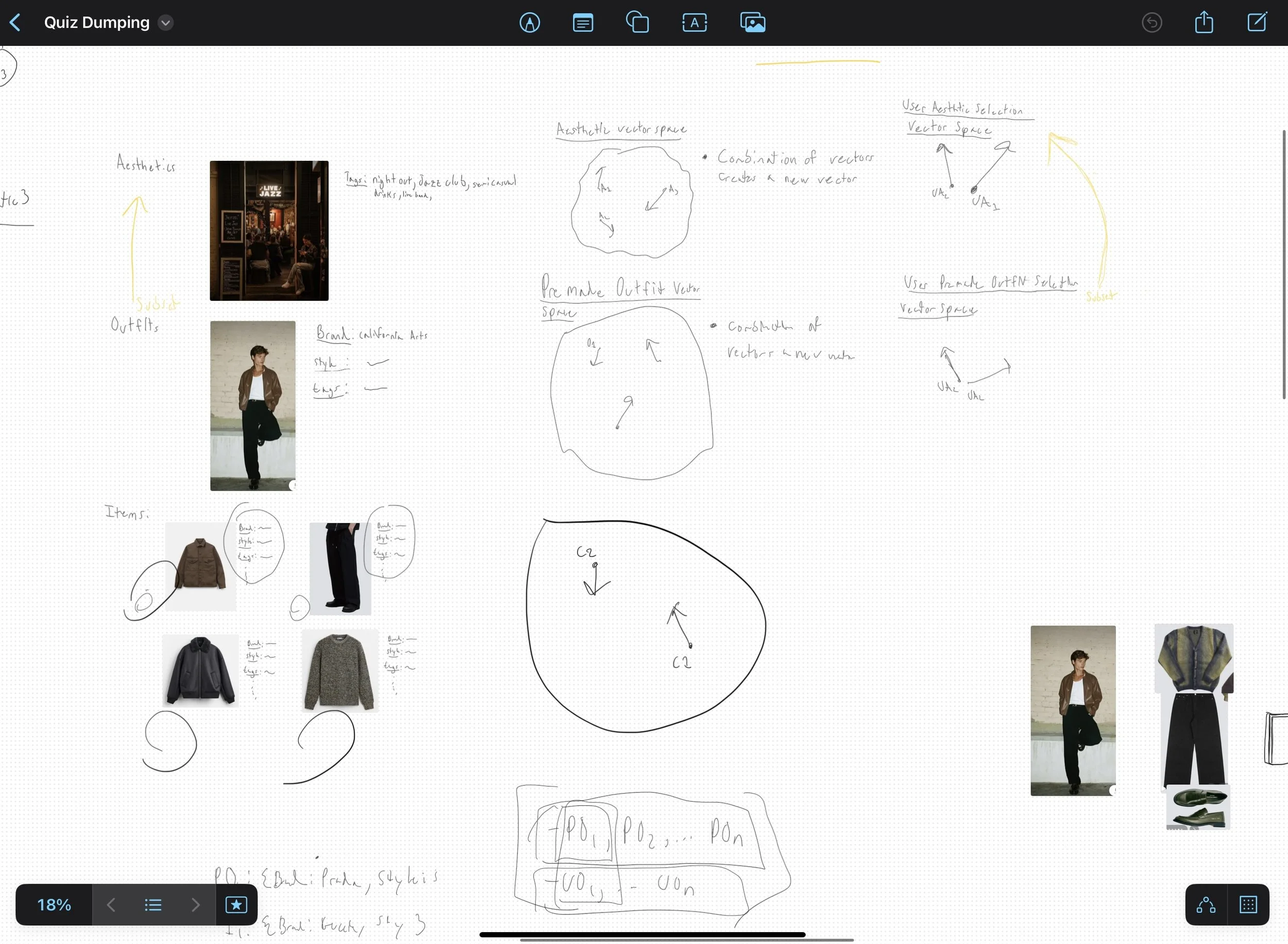
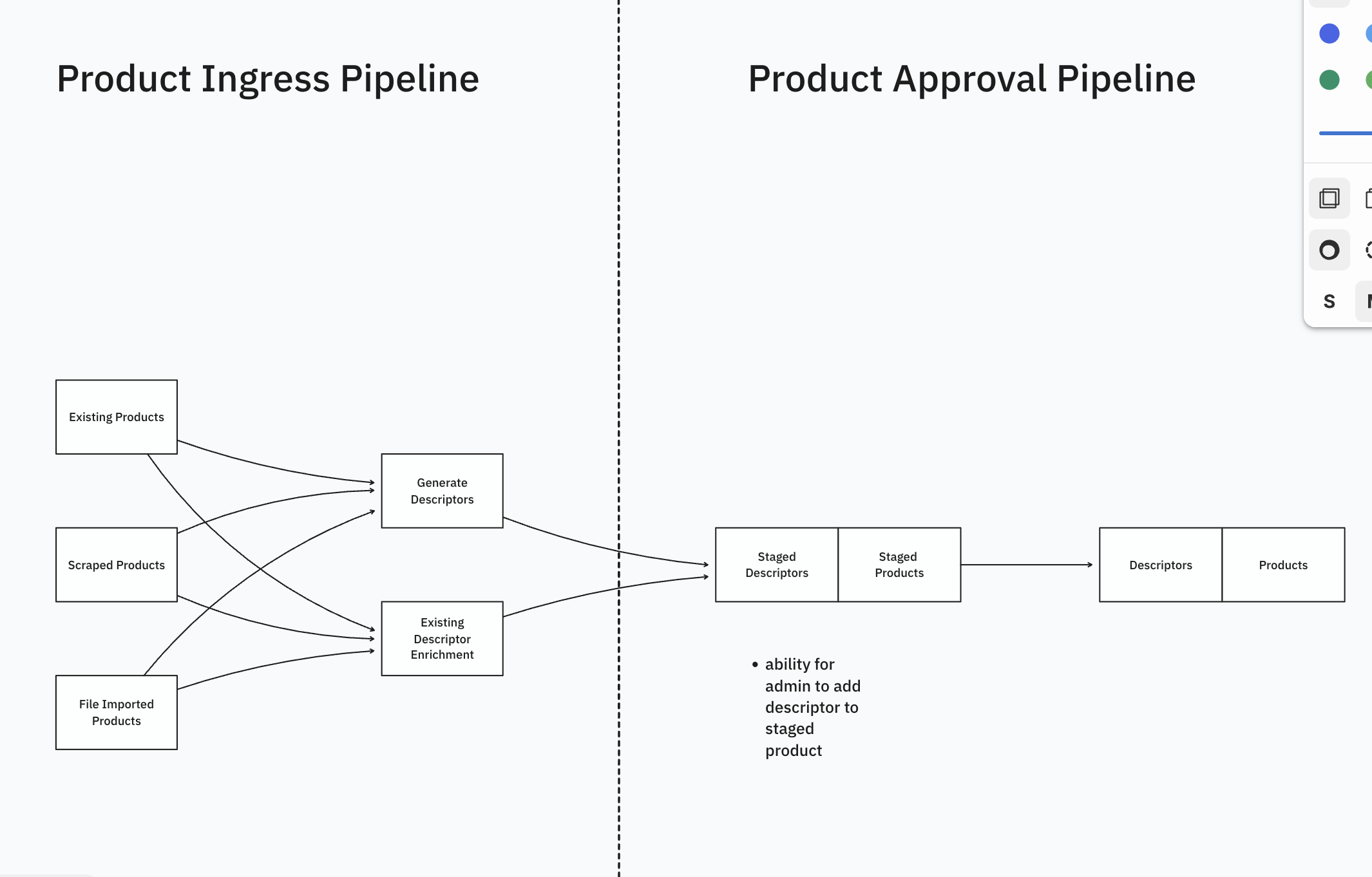
On the system side, items will be represented through simple text-based descriptors, and the product will learn each user’s taste from onboarding choices and in-app interactions. Early versions will use lightweight similarity search to generate recommendations, with space to evolve into more adaptive models as the product scales.
Wardrobe
A wardrobe is added to serve as a personal archive and eventually support resale. It will track past purchases, enable styling prompts such as “what pairs with this?”, and allow users to flag items for resale. Those resale flags can later help match pieces with potential new owners through fit and style similarity.
MVP Design Rationale
Goals:
Create and prove user value by reliably connecting people to clothing that matches their style
Concepts & Designs
Translate that user value into business value by demonstrating to brands that Fitcheck can deliver better‑qualified demand and lower return rates, justifying affiliate or partnership arrangements
Lay groundwork for a secondhand marketplace by treating wardrobes and wishlists as structured data that can later power peer‑to‑peer resale
Personalized Feed
The core of the product. The feed is generated through vector similarity search and refreshed weekly. The onboarding quiz initializes a user’s aesthetic preferences and reduces cold start issues. Every interaction helps refine the taste profile.
Wishlist
A simple, high-signal feature that influences recommendations and captures user intent. Each save enriches the taste vector and informs trend analysis.
Wardrobe
A library of a user’s purchased items. Ground work for personal record-keeping and future resale capabilities.
Purchases
Initially routed through [affiliate] links. This allows path for early monetization while validating Fitcheck’s ability to convert intention into action.