Junto
Personal Venture, Founder, 2025-Active
Junto started as something personal. For a long time I wanted a space where friends who cared about growth could actually support each other with intention. A space where showing up for yourself aligned with showing up for the people around you. When a small group of us naturally started sharing updates and keeping each other accountable, it became clear that I had found the community I had been looking for.
It started when we shared our goals for the rest of the year. That turned into conversations about the habits we wanted to build, and eventually we began checking in every day through the group chat. Those early check-ins worked, but they also exposed real pain points. We kept retyping the same updates because nothing had structure. If someone made more progress later that night, they wanted to edit their message but could not. Keeping a group streak manually was becoming too much work. Some people preferred habits while others needed daily to dos. The intent was strong, but we lacked the tools.
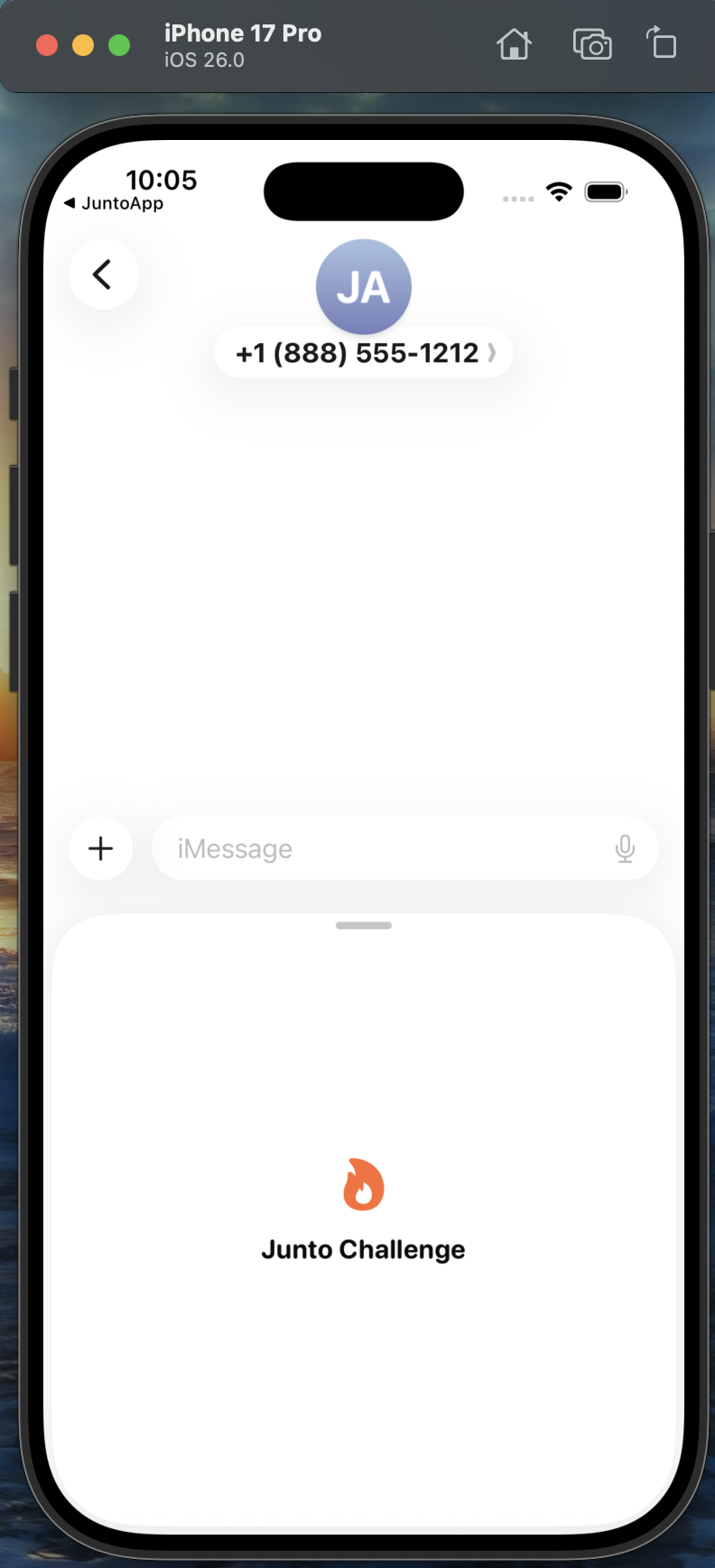
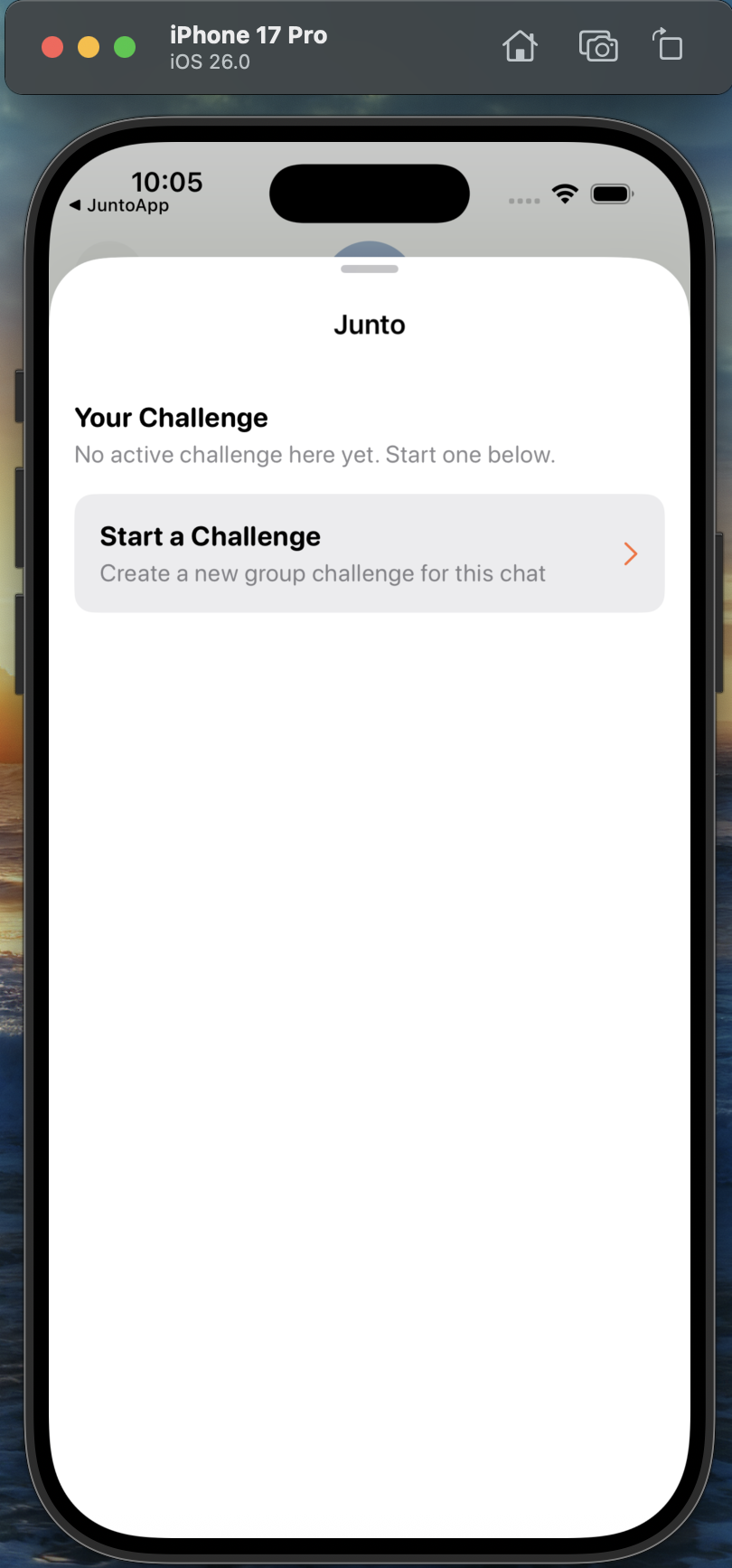
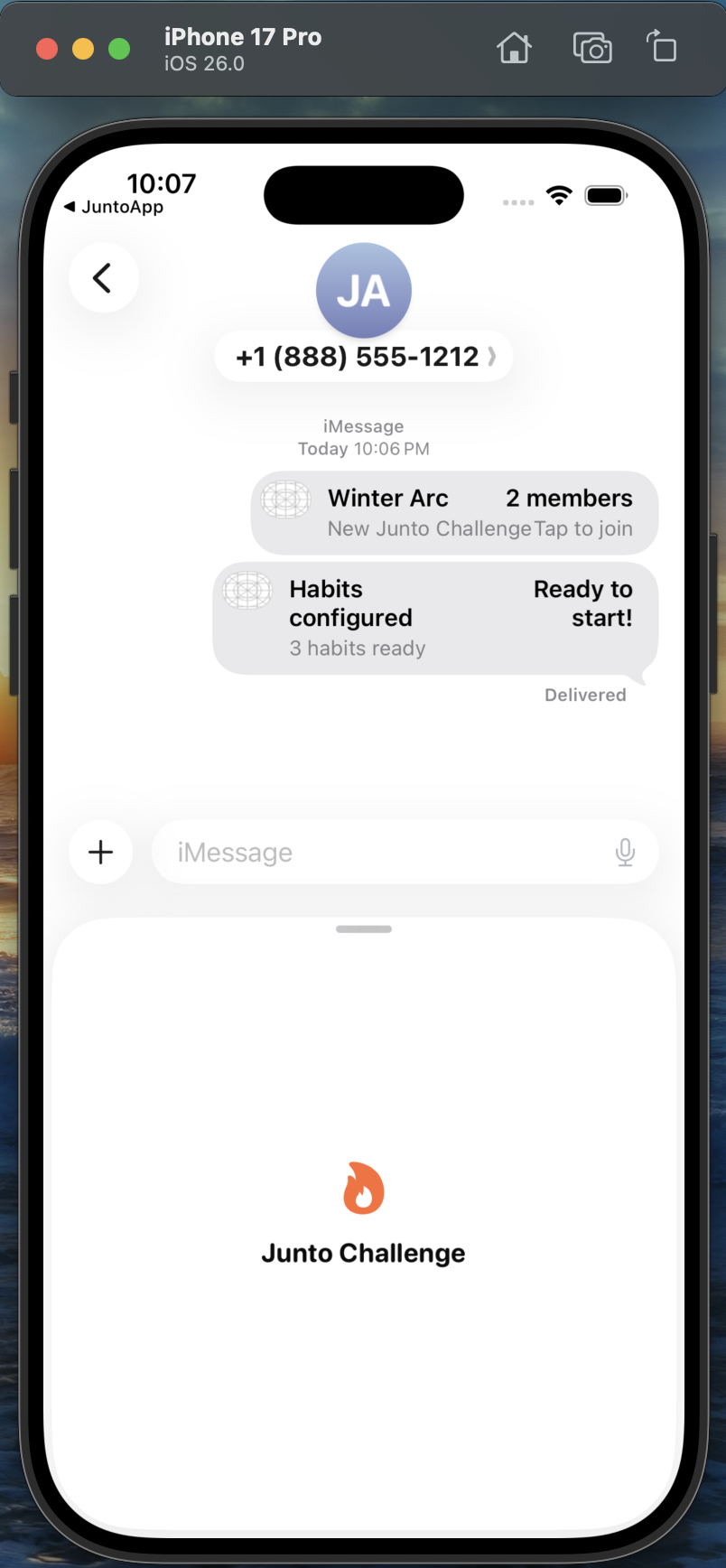
I realized everything we needed could live directly inside the chat we were already using. There did not need to be a separate app outside our daily flow. What we needed was something that made group accountability feel clear and organized. A way to treat it like a team activity. A way to add playful punishments, forgiveness, and nudges without making it heavy. A way to see progress together with full transparency. A way to gamify consistency and make it easier to stay aligned.
Thus Junto was born, named after Benjamin Franklin's original Junto Club, a small group of tradesmen and thinkers who met weekly to discuss personal improvement, shared values, and ways to help each other grow and contribute to their community.
Fun fact: that group generated the first ideas for what later became the public lending library system, the University of Pennsylvania, and Pennsylvania Hospital. Franklin designed the Junto to be a place where people invested in each other’s development. That spirit is what inspired this product.
Research & Insights
1. Social accountability is a stronger motivator than individual willpower
Behavioral science describes willpower as limited, sporadic, and easily depleted. Social commitments, on the other hand, are stable and persistent. Studies from the American Society of Training and Development found that people with an accountability partner are up to 65% more likely to achieve a goal, and structured groups increase that to 95%. Even fitness and productivity research repeat the same pattern: the presence of others makes follow-through significantly more consistent.
3. Meeting people in their existing flows
A common pattern in behavioral design is that people adopt habits more easily when the behavior fits into places they already spend time. When a tool requires switching contexts or opening a separate app, engagement usually drops. Familiar environments and familiar interaction patterns lower cognitive load and make it easier to stay consistent.
2. Group structures outperform individual streaks
Most habit apps focus on individual streaks, but those only go so far. When you are the only one affected by a miss, it is easy to let it slide. Our group streak felt different. When the streak depended on everyone, it created a shared responsibility. It felt more like a team effort than a personal tracker.
4. Transparency helps people stay consistent
One thing that came up early was how helpful it was to see each other’s updates. Not in a judgmental way, just as a clear picture of where everyone was at. Transparency made the commitment feel real.
Design Rationale
Accountability
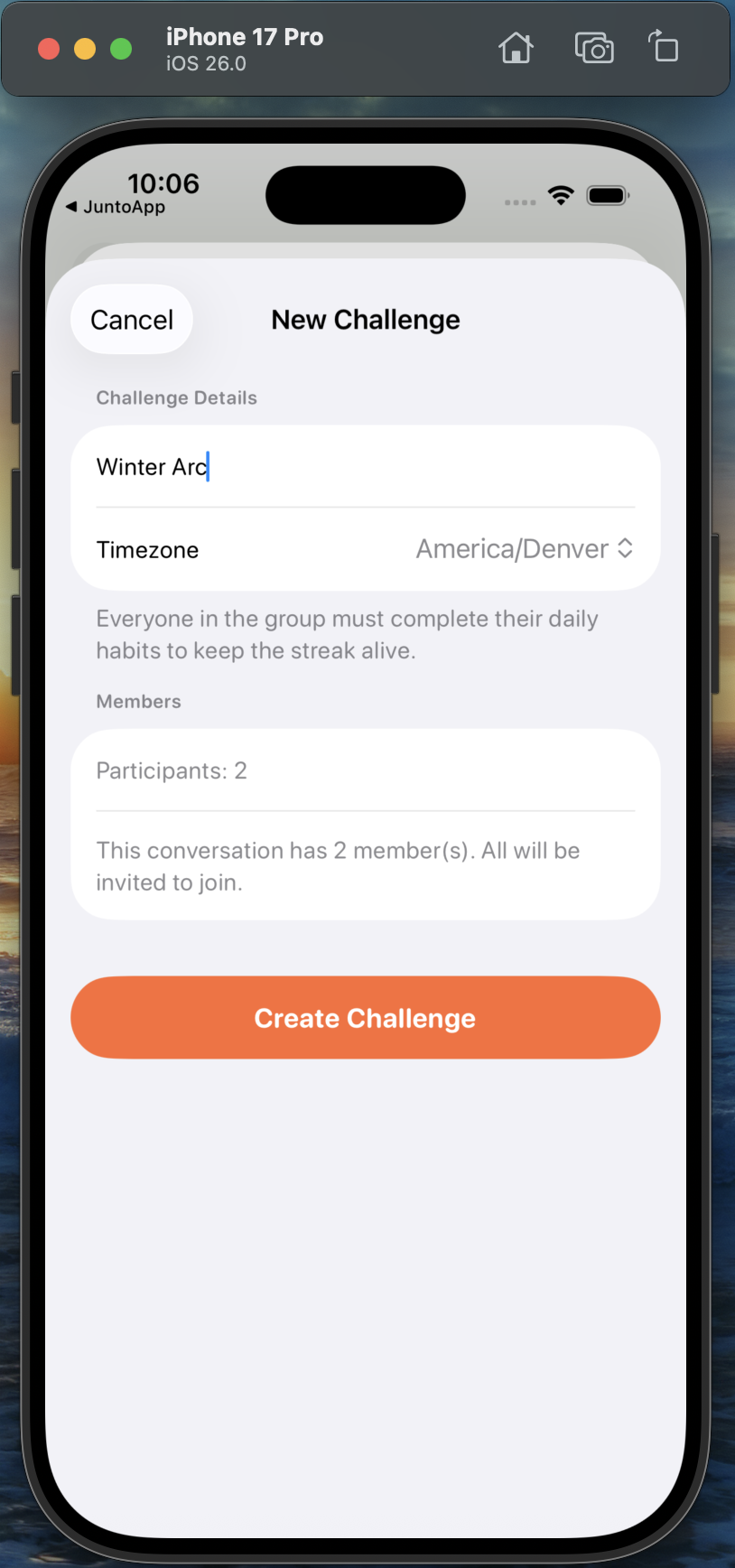
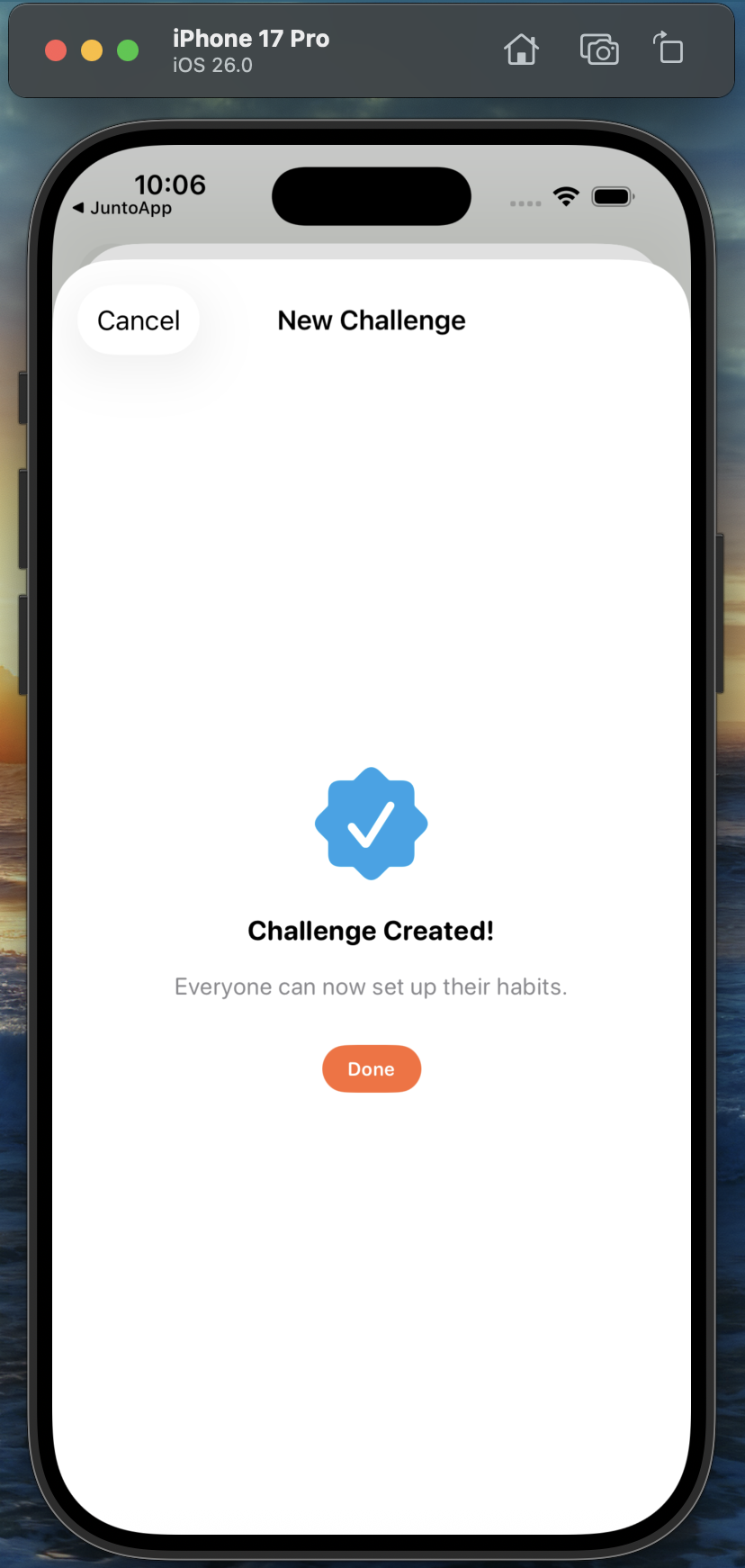
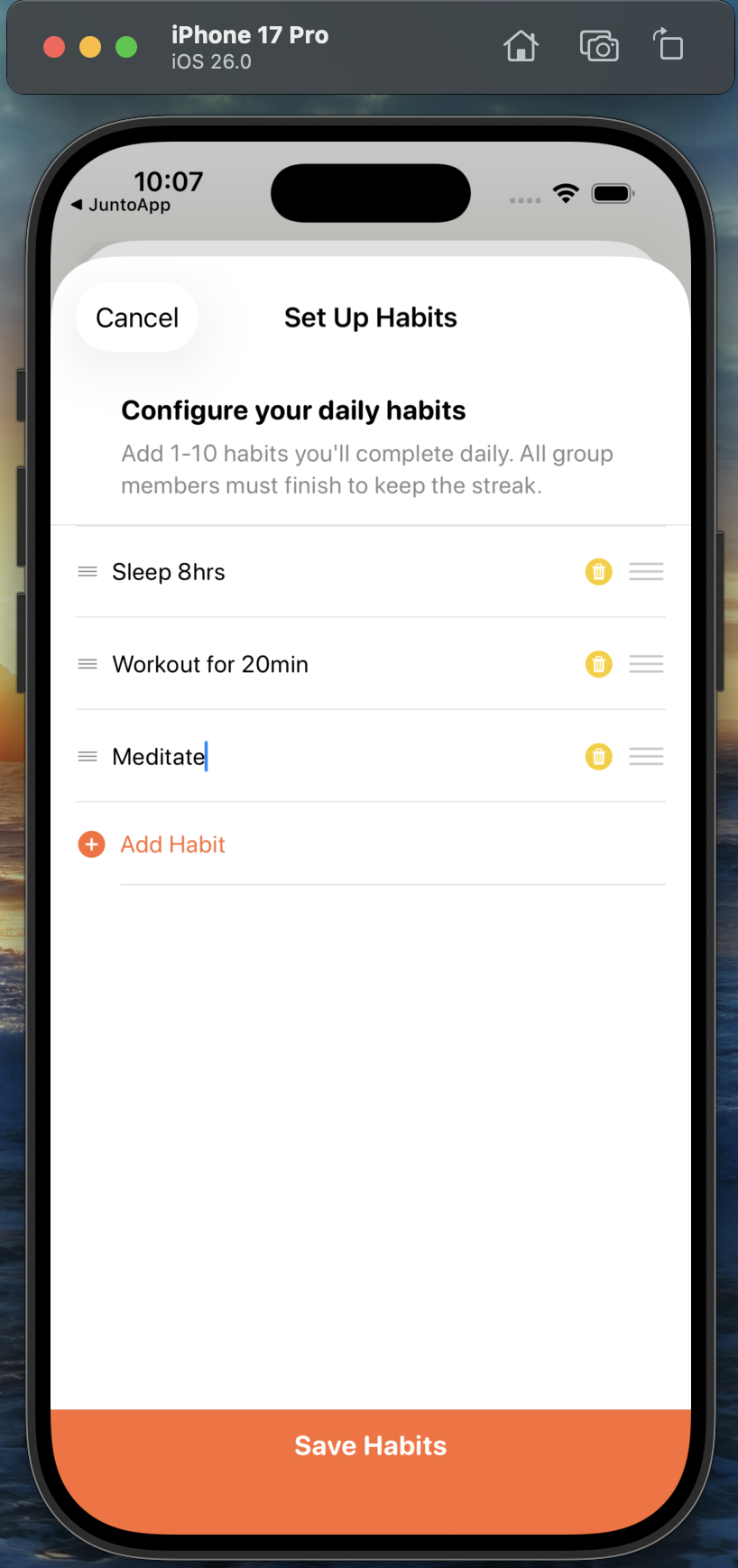
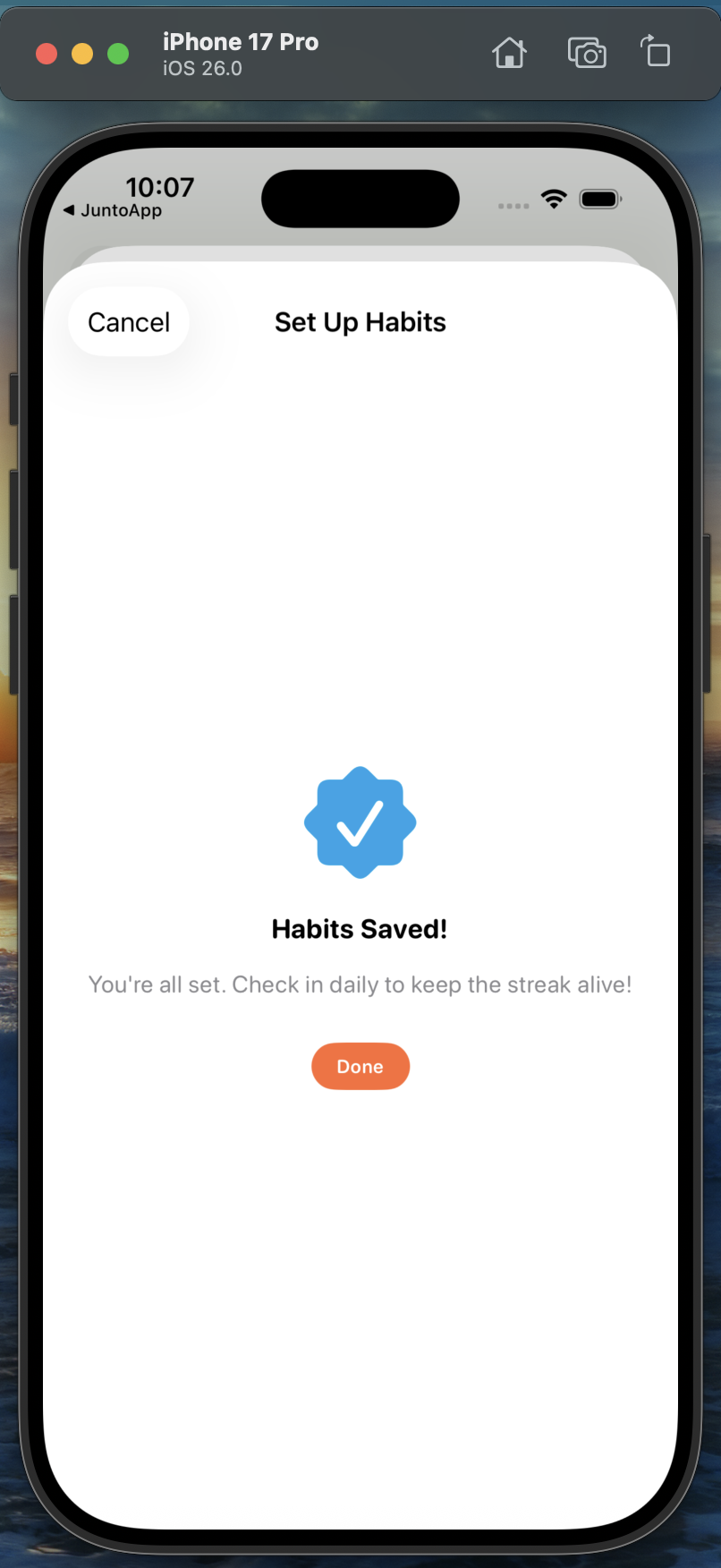
Junto centers the idea that the group streak matters more than the individual one. Progress only counts when everyone completes their habits, turning personal goals into a shared commitment. Decisions like starting a challenge, editing habits, or granting forgiveness require group agreement, creating a simple social contract. Nudges, reminders, and playful punishments keep the experience light but motivating.
Convenience
Check-ins happen directly in the space where people already talk, lowering friction and keeping the behavior anchored in familiar daily routines. This makes consistency easier and the system feel natural rather than separate.
Prototypes & Concepts (Work in Progress)
Transparency
Everyone can see daily progress, streak history, and who still has tasks left. This shared visibility helps groups stay aligned and makes the commitment feel real without adding pressure.
Flexibility
Some people work best with habits, others with daily to dos. Supporting both lets groups choose the style of accountability that fits their goals.