Rove
Personal Venture, Co-founder, 2020-2021
Rove began in 2020, born out of a quiet but persistent longing: wanting to do things with my friends, but never quite knowing what to do next. We were in a moment where discovery felt accidental by stumbling upon TikTok or a photo of someone’s perfect picnic, yet with no platform to actually find something to do in your own city with intention.
TikTok was captivating but ephemeral. It was great for aimless discovery, but terrible at retrieving something specific like finding fun things to do in San Francisco that resonated with you. Yelp and Google Maps offered the opposite: structured, utilitarian databases of businesses, but no sense of vibe, mood, or experience. The signal-to-noise ratio was off everywhere.
Rove emerged as an attempt to bridge that gap: A modern way to pick your pastime — intuitive, creative, vibe-driven, and rooted in the way our generation actually discovers experiences.
Research & Insights
1. People don’t search for “places.” They search for “vibes.”
Users don’t wake up wanting a “restaurant” or an “attraction.” They want a chill night with 3 friends, a spontaneous date idea, a solo reset, or something fun before 9pm.
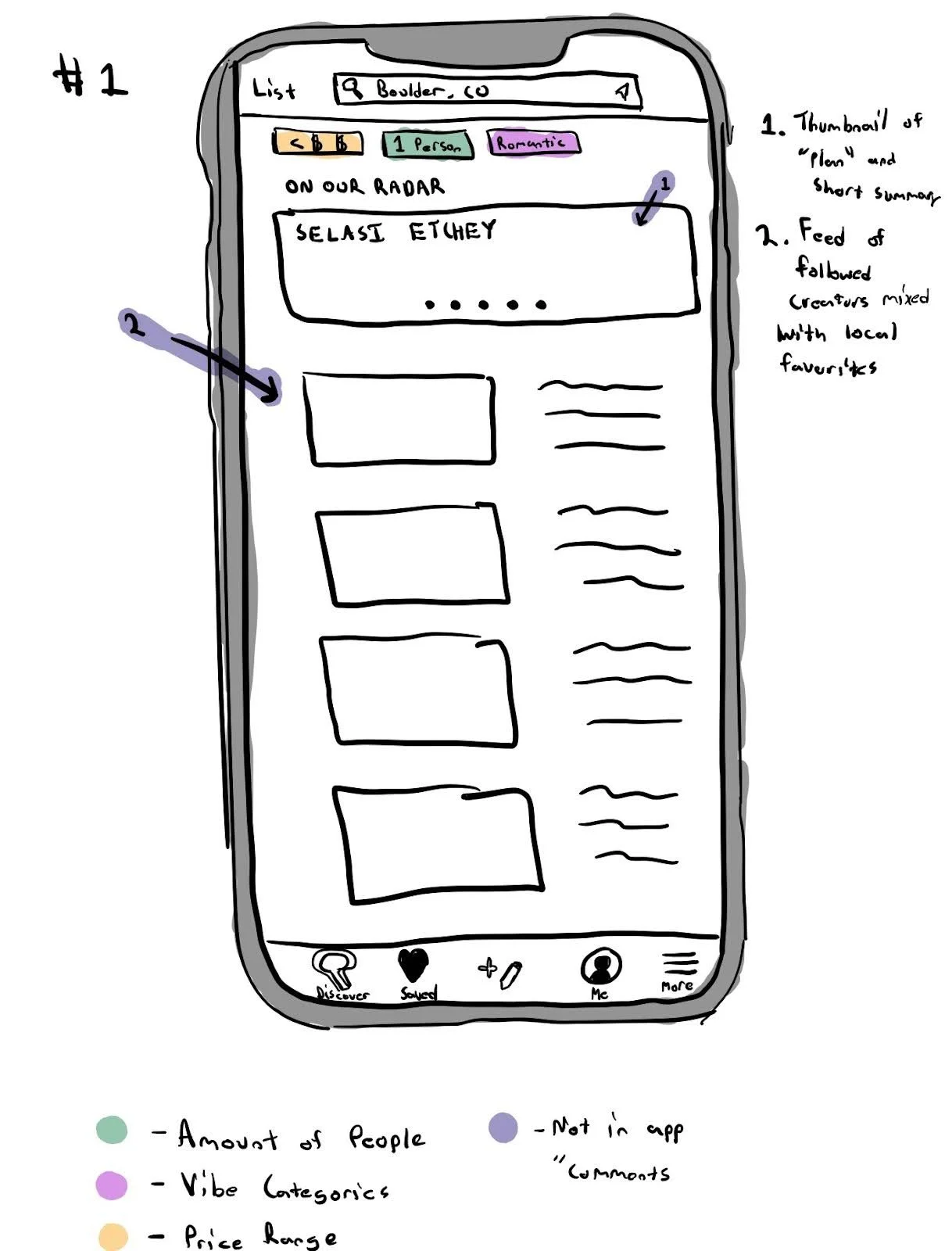
3. People want fewer options, not more.
Hick’s Law: the more choices on a screen, the slower the decision.
Economics & Flywheel
2. Creator-led content drives real action.
Influencer-marketing research consistently shows that young people(16–36) are heavily influenced by creators when deciding what to purchase, try, or visit.
4. Local Creators are the engine.
Local creators, micro-influencers, lifestyle curators, and even small businesses already produce the kind of content people want

Williamson, Debra Aho. “Influencer Marketing and the Path to Purchase.” EMarketer, Mar. 2020, www.emarketer.com/content/influencer-marketing-and-the-path-to-purchase.
1. Creators Post Experiences
Local creators and micro-influencers share plans, day-guides, and “moves” that feel personal, visual, and actionable. This fills the platform with high-quality, vibe-driven content.
2. Users Discover & Save Plans
Users filter by mood, budget, group size, or time, then save “Going to do this” or “Want to do this.” These are higher-intent signals than likes.
3. Local Businesses Benefit
The more users act on plans, the more visibility local shops, cafes, experiences, and venues receive. This creates natural pathways for partnerships, discounts, and creator-business collaborations.
4. Creators Earn Value (Audience + Partnerships)
Creators gain followers, local reputation, and the ability to partner with businesses in a more transparent, measurable way. This motivates them to post more.
5. More Content → More Users → More Value
More creators = more plans
More plans = more users
More users = greater business interest
Greater business interest = more creator incentive
More creator incentive = more content
Design Rationale
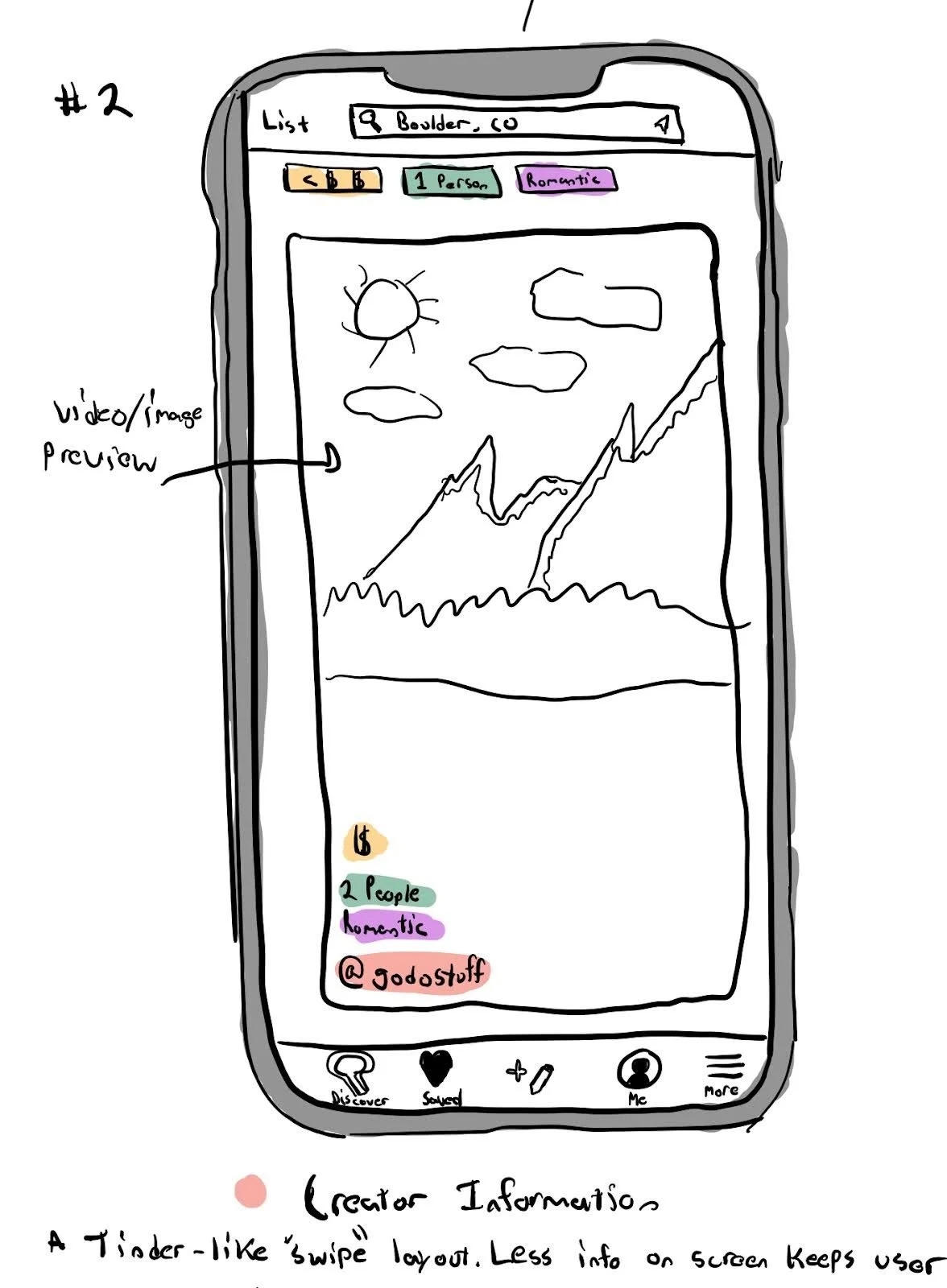
1. A Single-Card, Full-Screen Interaction
Rove borrows the attention mechanics of TikTok and Tinder, letting each plan take over the screen so mood, imagery, and story come through without the distraction of lists or clutter. It makes every pastime feel like a real experience rather than a line item.
3. Creator-Forward UI
Creators sit at the heart of the platform, with layouts that highlight their visuals, style, and voice. Guides are tied directly to the people behind them, making local lifestyle content feel personal and tangible.
2. Vibe First Filtering
Instead of categories like “food” or “bars,” Rove lets people filter by group size, relationship, vibe, budget, time, and energy. The search shifts from finding a place to matching a feeling.
3. Meaningful Engagement Metrics
Rove replaces likes with “Going,” “Want to,” and “Completed,” capturing real intent instead of passive scrolling. These signals help creators, users, and businesses understand what truly resonates.
Visual Theory of Concept